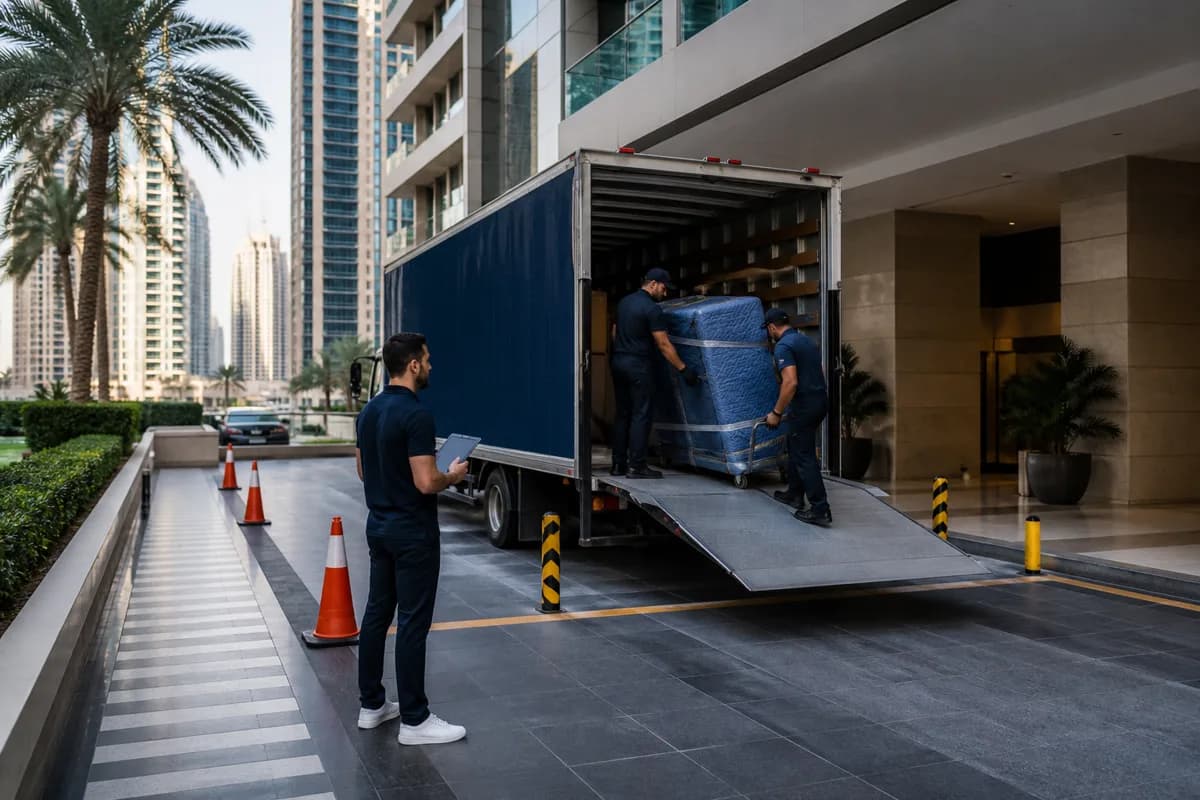
The distance between a moving vehicle and the property entrance affects time, safety and shared access. Confirming the correct loading point is a small task with a large operational impact.
Confirm where the vehicle may stop
Ask building or community management for the authorised loading location and any time or vehicle limits. Public kerbs, emergency routes and resident spaces should not be treated as moving bays.
Provide a map pin, entrance photo or written direction if the property has multiple vehicle approaches.
- Approved bay or kerb
- Vehicle height and length limits
- Barrier or gate procedure
- Maximum loading duration
Check the carry route
Walk the route from vehicle to service lift or property entrance. Note stairs, ramps, narrow doors, low clearances and areas where protection is required.
Remove personal obstacles but do not alter common areas without permission. Building staff may need to unlock or protect parts of the route.
- Distance to entrance
- Lift and corridor dimensions
- Door access method
- Surface-protection rules
Prepare crew and paperwork access
Confirm whether movers need identity details, contractor registration or access passes. Share requirements early enough for the company to prepare them.
Keep the approved booking, deposit receipt and management contact accessible. A screenshot stored offline can help if reception connectivity is poor.
- Crew document requirements
- Move permit
- Security contact
- Vehicle registration if requested
Keep shared areas safe
Do not block fire exits, ramps or normal lift doors. Stage items only in approved spaces and keep loose packaging controlled.
At the end of each property visit, check the route for debris or damage and complete any required security sign-out. Report issues immediately to the appropriate party.
- Use one crew coordinator
- Keep emergency routes open
- Remove packaging promptly
- Close permits correctly